

Roobet Crypto Casino (2026): How “Provably Fair” Works in Practice and What Players Can Actually Verify
Roobet has built its reputation around cryptocurrency payments and transparent game mechanics. By 2026, the concept of “provably fair” is no longer a niche feature for tech enthusiasts — it is a practical tool that any player can use to check whether a result was genuinely random. However, transparency only works when players understand what is being verified and how to do it correctly. In this guide, I will break down how the provably fair system functions at Roobet in real terms, what technical elements are involved, and which parts of the process are fully verifiable by the player.
What “Provably Fair” Actually Means in 2026
In technical terms, provably fair is a cryptographic verification model used primarily in crypto-native casino games. Instead of relying solely on a traditional RNG certificate issued by an external testing lab, the system allows the player to independently confirm that the outcome of a round was not manipulated after bets were placed. This is achieved through hashing algorithms and pre-committed server data.
At Roobet, the system is typically implemented in in-house titles such as Crash, Dice, Mines and other instant games. Before a round starts, the server generates a secret seed and publishes a hashed version of it. Because hashing is one-way (commonly using SHA-256 or similar algorithms), the original seed cannot be reverse-engineered from the hash.
Once the round ends, the original server seed is revealed. The player’s client seed and a nonce (a sequential number for each bet) are combined with the server seed to generate the final outcome. Since the hash was published beforehand, the casino cannot change the seed retrospectively without invalidating the hash.
The Role of Server Seed, Client Seed and Nonce
The server seed is generated by Roobet’s system before gameplay. Its hashed form is displayed to the player as proof that the outcome was pre-committed. This ensures the casino cannot alter the result after seeing player bets.
The client seed is either auto-generated or manually adjustable by the player. Changing the client seed effectively resets the fairness cycle, creating a new combination of inputs. In 2026, most crypto casinos, including Roobet, allow manual seed customisation to enhance player control.
The nonce is a counter that increments with every bet. It ensures that even with identical seeds, each round produces a unique outcome. When verifying a result, the exact nonce used for that bet is essential to reproduce the same number.
How to Verify a Game Result on Roobet
Verification is not theoretical. Roobet provides a fairness tab or verification interface within each provably fair game. After completing a round, players can access the server seed, client seed and nonce used for that specific bet.
To check the result, the player inputs these three values into a verification tool. Some players use Roobet’s built-in checker, while others prefer independent third-party hash calculators to confirm the outcome externally. The process involves running the combined seeds through the same hashing algorithm described in the game’s technical documentation.
If the resulting output matches the displayed game result — for example, a crash multiplier or dice roll number — the player can confirm that the round was not manipulated after the hash commitment was made. The mathematics are deterministic: identical inputs always produce identical outputs.
What Players Can and Cannot Independently Confirm
Players can verify that the outcome of a completed round corresponds exactly to the seeds that were pre-committed. This confirms there was no post-bet interference with that specific result.
However, provably fair does not guarantee profitability or influence house edge. The payout structure, probability distribution and edge percentage are still defined by the game’s design. Fairness means transparency of randomness — not favourable odds.
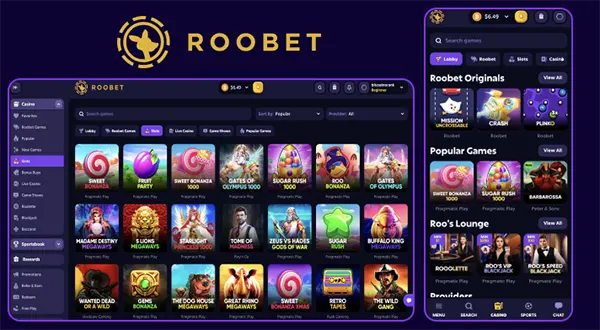
It is also important to understand that provably fair applies mainly to Roobet’s proprietary or crypto-native games. Third-party slot providers on the site may rely on certified RNG audits instead of seed-based verification. These systems are regulated differently and verified through licensing bodies rather than player-side cryptographic checks.
Provably Fair vs Traditional RNG Certification
Traditional online casinos depend on external testing laboratories such as iTech Labs or eCOGRA to certify their random number generators. These audits confirm statistical randomness but do not allow players to verify individual rounds themselves.
Provably fair shifts part of that verification power to the user. Instead of trusting only a regulator or testing agency, the player can independently confirm the integrity of each bet. This model gained popularity alongside cryptocurrency gambling because blockchain communities prioritise transparency.
By 2026, many crypto-focused operators combine both systems: third-party licensing for compliance and provably fair mechanics for direct transparency. Roobet’s model reflects this hybrid approach, offering cryptographic verification where technically applicable.
Common Misconceptions About Provably Fair Systems
A frequent misunderstanding is that provably fair eliminates volatility. In reality, game variance remains unchanged. Crash can still bust at 1.00x, and dice can still roll extremes. The system only confirms that the result was predetermined fairly — not that it will be favourable.
Another misconception is that players can predict outcomes using seed data. Because hashing functions are cryptographically secure, the unhashed server seed cannot be derived in advance. Prediction is computationally infeasible with current technology.
Finally, some assume that provably fair applies to all games on a crypto casino website. In practice, it is typically limited to specific in-house titles. Understanding which games support seed verification is essential before assuming universal transparency.